Key takeaways
- AI is accelerating remediation debt. Faster software development means more open source packages, more dependencies and ultimately more vulnerabilities to manage.
- Reactive remediation can’t scale. Vulnerability scanning remains important, but organizations also need stronger governance over the software entering production.
- Preventing vulnerabilities beats patching them. Trusted software sources, curated catalogs and policy-driven software consumption reduce remediation work before it exists.
- Software governance is now a leadership priority. Boards increasingly expect engineering leads to demonstrate how software is governed, why it’s trusted and how risk is being managed consistently.
AI coding assistants are dramatically increasing development velocity across modern engineering teams. At the same time, confidence in AI tools remains far from universal, and 45.7% of developers believe they either only somewhat trust (or actively distrust) the accuracy of AI-generated outputs.
In other words, faster development hasn’t necessarily translated into more trustworthy software.
The consequences of AI-assisted development are plentiful. In enterprise organizations, 60% of engineering teams already spend at least half of their time maintaining existing software and fixing production issues instead of building new features. And as AI continues to increase the volume of software entering production, many organizations are discovering that the real bottleneck is no longer identifying vulnerabilities but keeping pace with the growing remediation backlog they’re creating.
This changes the narrative, and rather than asking how quickly an engineering team can patch vulnerabilities after deployment, forward-looking organizations are asking a different question altogether:
How can we prevent so many vulnerabilities from entering production in the first place?
Here’s what you need to know.
The open source vulnerability backlog is a software supply chain problem
AI coding assistants are changing how developers build applications, and 41.7% of developers are already using AI tools daily.
Rather than writing every line of code from scratch, developers are increasingly discovering, recommending and integrating existing open source packages. The challenge with this, however, is that every new package introduces a new risk to the organization, and each dependency brings its own release cycle, maintenance requirements and potential vulnerabilities.
That means:
- More open source packages entering production
- More transitive dependencies to track
- More CVEs to assess
- More upgrades to validate
- More engineering time spent on maintenance instead of innovation
It should come as no surprise to hear, then, that 60% of organizations working with open source data technologies report struggling to keep up with upgrades, updates and security patches.
It’s because of AI development that organizations continue to fall behind despite investing heavily in vulnerability management. Ultimately, visibility isn’t really the problem anymore, it’s keeping a lid on the volume of software entering a production environment.
This is a supply chain challenge and it’s creating remediation debt among engineering teams.
What is remediation debt?
Remediation debt behaves much like technical debt. It accumulates quietly over time, becoming visible only when vulnerabilities need fixing or when engineering teams are forced to interrupt planned work to respond to another urgent patch.
Organizations often create remediation debt long before vulnerabilities are discovered by:
- Allowing developers to consume software from ungoverned sources
- Introducing AI-generated package recommendations without guardrails
- Lacking policies around approved open source components
- Waiting until after deployment to evaluate software risk
- Treating remediation as a reactive security activity instead of a software governance challenge
For engineering teams, the goal here should be to reduce the amount of remediation work that exists in the first place by governing which software is allowed into their environments before it ever reaches production.
The organizations pulling ahead are preventing remediation work before software reaches production
For a long time, vulnerability management was a reactive practice, and vulnerabilities were only fixed when engineering teams discovered them inside their applications.
Solving vulnerabilities after the fact made sense in a world where code velocity moved as fast as a human developer could move. But AI has fundamentally changed this equation and as development accelerates, organizations simply can’t rely on finding and fixing every vulnerability after it reaches production.
That means organizations have to make remediation decisions much earlier in the software lifecycle, and rather than asking “How quickly can we remediate this vulnerability?,” engineering leads need to ask “Should this software have entered our environment in the first place?”
The importance of proactive software governance
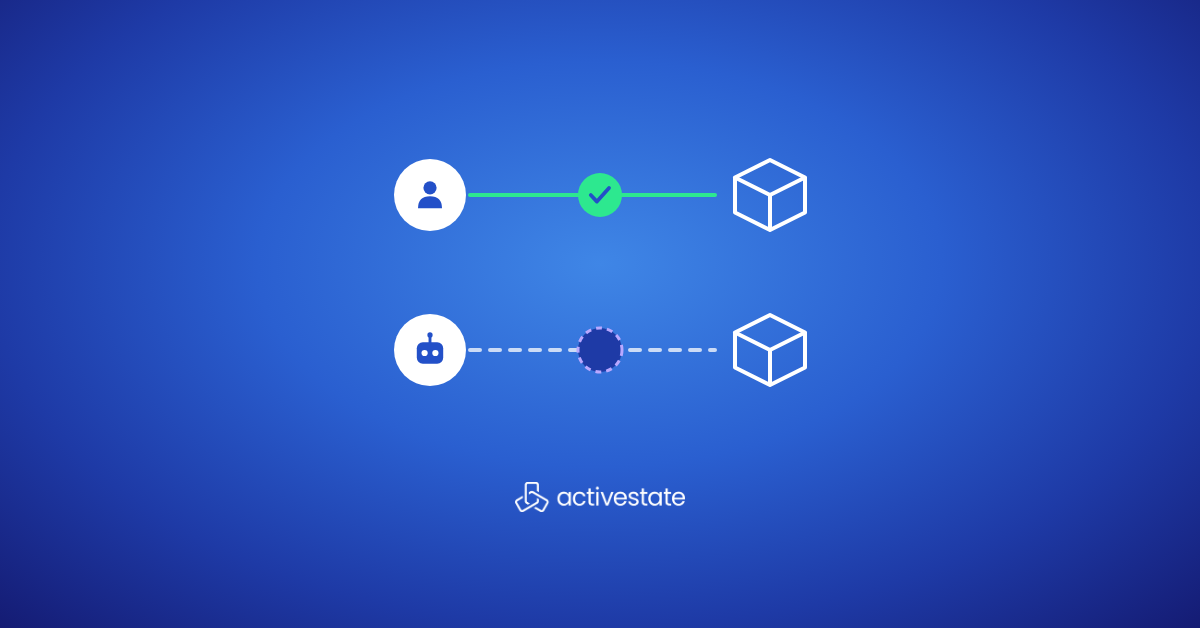
Rather than leaving every package selection to individual developers (or increasingly, AI coding assistants), organizations are introducing guardrails around software consumption that all too often include:
- Trusted software sources that developers know have been vetted
- Curated software catalogs containing approved open source components
- Policy-driven software consumption that automatically enforces organizational standards
- Software provenance and verified builds that provide confidence in where software came from and how it was produced
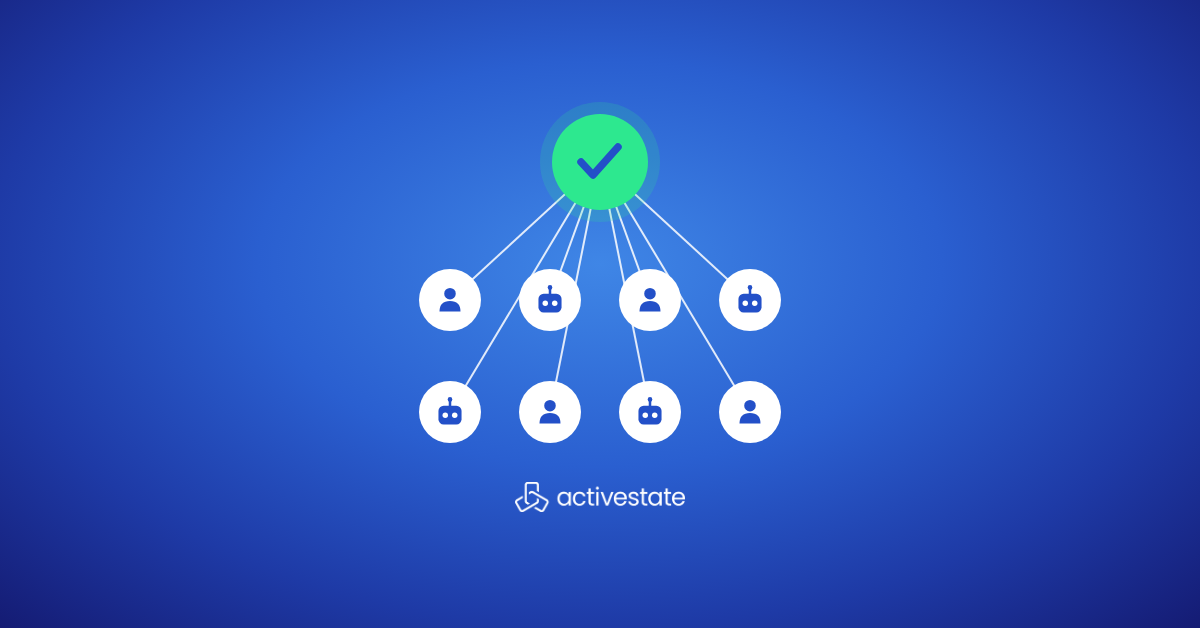
Together, these controls reduce uncertainty before software ever reaches production, ensuring that the safest open source choice is the easiest (and only!) choice.
Better inputs create fewer vulnerabilities downstream
When developers and AI coding assistants are pulling from trusted and governed repositories, organizations dramatically reduce the number of vulnerabilities that end up in their production environments. They also limit the number of unsupported packages and unexpected dependencies that require attention later on.
This idea represents a new philosophy in open source vulnerability management. Essentially, the strongest security programs are now defined by how effectively they prevent unnecessary remediation work from being created in the first place.
Remediation is becoming an executive performance metric
As cyber threats become more sophisticated and software supply chains grow more complex, boards and regulators are asking different questions. They’re no longer interested only in whether vulnerabilities exist. They want to understand how organizations are managing risk over time, and whether security decisions are governed by repeatable processes rather than ad hoc responses.
Increasingly, executive leadership is expected to demonstrate that software risk is being managed in a consistent and defensible way.
The metrics that matter are evolving
Security leaders are finding themselves accountable for metrics that reflect both operational maturity and governance, including:
- Mean time to remediate (MTTR): How quickly can critical vulnerabilities be resolved?
- Exposure windows: How long are known vulnerabilities left in production?
- Software governance: What controls determine which software is allowed into production?
- Decision defensibility: Can security teams explain and justify why software was approved, deployed and trusted?
Organizations can certainly improve remediation performance by fixing vulnerabilities faster. But if AI-assisted development continues increasing the volume of software entering production, security teams may simply find themselves running faster on the same treadmill.
The organizations making the biggest gains, then, are tackling both sides of the coin. Yes, they’re continuing to improve remediation speed, but they’re also reducing the number of vulnerabilities that enter their environments in the first place.
You can’t patch your way out of exponential software growth
As coding assistants become a standard part of modern development workflows, organizations will continue consuming more open source software and introducing more dependencies into their applications. For security teams, this means the remediation challenge isn’t going away anytime soon. In fact, in many cases, it’s only becoming more difficult to keep pace.
Finding and fixing vulnerabilities, then, will of course always remain an essential part of any security program. But organizations that rely exclusively on reactive remediation will continue fighting an uphill battle as software supply chains become larger and more complex.
The organizations pulling ahead are approaching the problem differently, and they’re reducing the amount of remediation work that needs to happen in the first place by governing what software enters their environments in the first place.
This is exactly what ActiveState’s Curated Catalog is designed to solve.
Rather than leaving software selection to chance, the Curated Catalog provides organizations with the world’s largest repository of vetted, built-from-source OS packages that come with verified provenance and continuous maintenance.
The result is fewer vulnerable packages entering production, fewer emergency remediation cycles and greater confidence that the software powering the business is both trusted and governable.
To learn more about how ActiveState’s Curated Catalog helps organizations reduce remediation backlog by governing open source at the source, get in touch with our team today.
Rebecca Banks is Senior Product Marketing Manager at ActiveState, where she leads go-to-market strategy for software supply chain security. She is currently a contributor to the Linux Foundation and OpenSSF 2026 AI Security Study on global AI security maturity for enterprises and critical infrastructure organizations.
.png)